AI: The Driving Force Behind Business Innovation in 2025
AI: The Driving Force Behind Business Innovation in 2025
The world of business technology is evolving at a rapid pace, and AI (Artificial Intelligence) is right at the center of it. In 2025, AI will no longer be a futuristic option, but an essential tool that determines whether your business leads the pack or gets left behind. From automation to marketing, from website development to content creation, AI helps you simplify and accelerate your business processes.
Why AI is non-negotiable
- Faster processes: Tasks that used to take hours or even days can now be completed within seconds using AI.
- Higher efficiency: Because AI learns from data, your processes continuously get smarter. Fewer human errors and more automation lead to rising productivity.
- Cost-effective: With AI, you can automate repetitive tasks, freeing up your team to focus on more important and creative work.
- Competitive advantage: Businesses that embrace AI early strengthen their market position. Those who ignore the power of AI now risk falling behind.
In short: AI is not just a technical tool, it’s the engine that takes businesses to the next level in 2025. And that applies to every sector, from retail and e-commerce to B2B services.
How AI improves your marketing, website, and SEO

AI offers countless applications and benefits, both in the back-end (operational automation) and the front-end (customer interaction and marketing). A few examples:
AI for Marketing
- Personalized ads based on customer behavior
- Automated email and social media campaigns
- Data-driven insights for optimizing marketing budgets
AI for Website Development
- Dynamically adjusting content and layouts based on user preferences
- Automatically generating website copy or product descriptions
- Smart web design solutions, where AI optimizes elements like color use or call-to-action buttons
AI for Content Creation and Design
- Generating ideas for blog posts, social media content, and e-books at lightning speed
- Automatically designing banners, visuals, and even videos (with AI design tools)
- Real-time feedback on design choices, so you can adjust on the fly
AI for SEO Improvement
- Automated keyword research and competitor analysis
- Real-time optimization suggestions for copy, meta tags, and titles
- Analyzing search intent and user behavior to continuously fine-tune content
These examples show just how broad the application of AI can be, and why it’s becoming the standard for businesses that want to stay ahead.

Our AI solutions: directly applicable in your business
AI Sales Agent
An AI Sales Agent is a virtual assistant that proactively communicates with your website or webshop visitors, focused on increasing conversion:
- Proactive approach: Recognizes potential customers and asks targeted questions.
- Product recommendations: Immediately offers relevant products or services based on browsing behavior and interests.
- Checkout and lead generation: Shortens the ordering process and automatically saves lead data in your CRM.
Example case: An Online Retailer with High Cart Abandonment
A mid-sized online retailer in fashion receives an average of 50,000 unique visitors per month. Although the traffic is solid, the business struggles with the following issues:
1. High cart abandonment
- As many as 7 out of 10 visitors who add an item to their cart end up dropping off.
- Uncertainty about sizes, return policies, and payment methods plays a major role.
2. Lack of personal guidance
- The webshop is optimized in terms of navigation and design, but little to no proactive help is offered to hesitant customers.
- The support team spends a lot of time on repetitive questions in the traditional live chat.
3. Limited insight into customer behavior
- The business uses Google Analytics, but the data provides few concrete handles for further optimizing the customer journey, particularly the checkout process.
- It’s unclear exactly where customers drop off and which doubts or questions are most dominant.
4. The result The retailer is missing out on revenue because many interested visitors still decide not to purchase. The potential is there, but the question is how to better guide these visitors toward a final purchase.
Implementing the AI Sales Agent
The online retailer decides to integrate an AI Sales Agent. This smart chatbot is trained with product information (such as sizes, colors, and stock), but also with return policies, shipping conditions, and payment options. It also connects with:
- CRM system: for up-to-date customer information and order history.
- Inventory system: AI can immediately confirm whether a specific size is in stock.
- Payment modules: support and guidance during checkout.
Key features:
- Proactive approach Analysis of click behavior: if a customer lingers on a product page or hesitates at checkout, a chat message appears: “Can I help you with sizing or the return policy?”
- Targeted offers and cross-selling When an item is in the cart, the AI Sales Agent can suggest matching accessories and relevant offers.
- Checkout assistance If a visitor starts checking out but drops off, the AI asks: “Any questions about payment methods or delivery times?” This lowers the barrier to completing the purchase.
Results and Conversion Boost
After two months, the retailer measures the first results:
1. Conversion increase from 3.5% to 5.5%
- Growth of over 57% based on the same number of visitors.
- With 50,000 visitors per month and an average order value of €60, this is a significant revenue boost.
2. 30% drop in cart abandonment
- Previously, 70% dropped off during checkout. That figure has now dropped to 49%.
- Doubts about sizes and payment methods are quickly resolved by the AI, resulting in more completed purchases.
3. 200% increase in chat interactions
- While that sounds like a lot, the vast majority is fully automated.
- The support team receives 40% fewer repetitive questions, leaving more time for complex customer issues.
4. Increase in customer satisfaction
- After each interaction, customers can leave a short rating (e.g. a star system).
- More than 80% give 4 or 5 stars, partly thanks to instant help and no waiting times.
5. Data-driven optimizations
- The AI registers recurring questions and hesitations, for example around size selection or delivery time.
- The retailer adjusts product descriptions and size guides accordingly, further improving the customer journey.
The Customer Journey in Practice
1. Orientation
- A visitor lands on the homepage and browses the latest jacket collection.
- The AI Sales Agent stands ready with a subtle welcome message: “Got questions about the right size or color? I’m happy to help.”
2. Product selection
- The customer chooses a jacket and adds it to the cart.
- When the customer keeps hesitating over the size, the AI chat appears: “Need help finding your size?” The customer answers a few questions and gets size advice.
3. Cross-sell/Up-sell
- The AI Sales Agent immediately suggests matching accessories, like a scarf or gloves.
- The customer clicks through and adds a scarf, because an attractive bundle discount is shown.
4. Checkout
- When completing the order, the customer hesitates about delivery time. The AI immediately responds: “Your package can be delivered within 1-2 business days. Returns are free.”
- The customer trusts the service and completes the purchase.
Follow-up
- A week after delivery, the AI Agent sends an automated email: “Happy with your purchase? Here’s a discount to invite you back for your next order.”
Result: The customer experiences a smooth, personalized journey and is more likely to make repeat purchases.
Lessons from this case
1. A proactive approach pays off Many customers hesitate before making a purchase. An AI Sales Agent can immediately remove that hesitation.
2. Personalization builds trust Dynamic advice based on browsing and purchasing behavior increases the likelihood of success.
3. Efficiency for the support team Although chat interactions increase, most questions are answered automatically. Staff have more time for complex issues.
4. Data-driven optimization The AI continuously collects information about customer behavior and product choices, which you can use to further fine-tune your content and offering.
This case highlights the power of an AI Sales Agent. The retailer achieved a significant rise in conversion and a substantial drop in cart abandonment by stepping in at the right moments with relevant, personalized help.
The lessons learned apply to any webshop, whether you sell clothing, electronics, or other products. With a proactive AI chatbot, you can convert more visitors into buyers and improve the customer experience, while taking the pressure off your support team.

AI Customer Service
An AI Customer Service solution supports your customer contact 24/7:
- FAQ automation: Frequently asked questions about delivery, returns, or subscriptions are answered immediately.
- Ticket routing: Complex questions or complaints are automatically forwarded to the right department.
- Self-service customer portal: Customers can resolve simple issues themselves through the AI assistant.
Example case: A Software Company with Recurring Installation and Update Questions
A growing software company offers a number of SaaS solutions and desktop applications for both SMEs and large enterprises. The number of customers is increasing, but so is the pressure on the helpdesk:
1. Many recurring questions
- More than 60% of all incoming tickets and chat requests are about the same topics: installation issues, update instructions, or system requirements.
- Support staff spend a lot of time on repetitive and relatively simple questions as a result.
2. Long waiting times
- The average email response time has grown to up to 48 hours.
- Customers who call in experience waiting times of 10 to 15 minutes during peak periods.
3. Poor customer satisfaction
- Due to long waiting times and slow handling, customer satisfaction (measured via NPS and reviews) has declined.
- New customers who need help quickly risk losing confidence in the product.
4. The result The growing number of support requests puts significant pressure on the team, while customer satisfaction drops. Staff have little time left to tackle more complex problems and product improvements, which can create a negative spiral.
Implementing AI Customer Service
The software company decides to integrate an AI Customer Service solution that can be used across chat functions, email responses, and self-service portals. This AI assistant is trained with:
- Installation guides and update instructions
- FAQs for common technical issues
- Internal knowledge base articles from the support department
Key features:
1. Real-time chat assistant
- The AI immediately answers frequently asked questions (“What are the system requirements?” / “How do I update to the latest version?”) without human intervention.
- For more complex questions, the AI automatically transfers to a live agent.
2. Automated ticket handling
- Incoming emails are scanned for keywords, after which the AI suggests sending a relevant knowledge base article directly.
- If the question can’t be fully answered, a detailed ticket is created and assigned to the right specialist.
3. Self-service portal
- The AI compiles an online knowledge base with step-by-step guides, common error codes, and solution paths.
- Users are automatically directed to relevant articles via the chatbot or email.
Results and Customer Satisfaction
After implementation and a ramp-up period of around three months, the software company starts seeing clear results:
1. Halving of repetitive tickets
- Thanks to self-service and the real-time chat assistant, the number of basic questions (installation, updates) that actually reach staff has dropped by 50%.
- Support agents can now spend more time on complex or unique problems.
2. Faster response and handling
- The average waiting time for chat questions has dropped from 5 minutes to a matter of seconds (instant response by the AI).
- Peak-period phone waiting times have been reduced from 10-15 minutes to 2-3 minutes, as many questions are already resolved online.
3. 15% higher customer satisfaction (NPS score)
- Customers appreciate the 24/7 availability and fast help from the AI assistant.
- The Net Promoter Score (NPS) has risen from 35 to 40 over six months, which is a significant improvement.
4. Cost efficiency in support
- The company finds that using AI leads to lower staffing costs: fewer temporary workers are needed during peak periods.
- There is room to internally train support staff for more complex roles, such as product development or customer relationship management.
5. Insights for product development
- The AI tracks recurring technical issues, such as specific error codes or compatibility problems.
- This data is shared with the product team, which implements targeted updates and improvements to make the software more stable and user-friendly.
The Customer Journey in Practice
1. Installation process
- A new customer buys the software and immediately runs into an installation problem. Previously, they had to wait for an email reply or phone support.
- Now they open the chat on the website, where the AI responds within a second with a step-by-step guide tailored to their operating system and error code.
2. Update information
- The customer reads that a new version has been released and wants to know how it works. The AI assists in real time and guides them through the update process.
- For questions about license terms, the AI automatically links to a FAQ article.
3. Self-service knowledge base
- If the customer needs a more detailed explanation, the AI refers them to the self-service portal with images, videos, and FAQs about installation and update procedures.
- The customer experiences “instant service,” without having to create a support ticket.
4. Evaluation After the interaction, the customer is kindly asked to leave a short review with a 1 to 5 star rating. The customer gives 5 stars because the process was fast and clear.
Lessons from this case
1. Self-service and automation Simple, recurring questions can be handled excellently by an AI. This reduces support pressure.
2. 24/7 availability Customers of software companies are often in different time zones or work outside office hours. The AI is available day and night.
3. Fast responses increase customer satisfaction The AI can respond almost instantly, eliminating frustration and waiting time.
4. Insights for product teams Because the AI tracks all questions and error codes, the company gains valuable feedback for product improvements.
5. Higher employee satisfaction Support staff no longer have to limit themselves to repetitive tasks and can work on more complex issues or new projects.
This case shows how an AI Customer Service solution directly contributes to higher customer satisfaction, shorter waiting times, and a more efficient support department. The halving of repetitive tickets and the 15% higher NPS score illustrate the positive impact on both customers and staff.
AI Automation & Integrations
In addition to direct customer interactions, SalesFision also offers AI Automation within your existing processes, such as:
Lead Capture & CRM Integration
- Automatically capturing leads from your website, social media, or campaigns
- Direct connection with your CRM, so your sales process is always up to date
Customer Ticket Management
- AI scans incoming messages and automatically creates tickets
- Prioritizes and assigns tasks to the right team members
Appointment Setting
- Automates the scheduling of appointments and demos
- Checks the real-time availability of your staff
AI Automation Outreach (email/social media)
- Personalized messages and campaigns based on customer segmentation
- Continuously learning and optimizing your email and social strategy
Why you need to start now: The competition isn’t standing still. While you might still be weighing up whether to use AI, your direct competitor may already be capturing leads through an AI Sales Agent, or handling customers 24/7 with AI Customer Service. This leads to better customer experiences, higher conversions, and more revenue.
Don’t fall behind, embrace AI today
AI is not just a hype. It’s the future of business automation and growth. By integrating AI in the right way into your website, marketing, content creation, and customer service:
- You grow your competitive advantage: Businesses that use AI get more out of their online presence and business processes.
- You save time and costs: Many manual tasks are automated, allowing your team to focus on strategy and innovation.
- You offer better customer experiences: From faster responses to personal advice, AI takes your service to the next level.
At SalesFision, we make sure you can get started with AI quickly and easily. Whether you choose our AI Sales Agent, AI Customer Service, or AI Automation & Integrations, we guide you every step of the way. With our solutions, you’re ready for 2025 and the years beyond.
Ready to step into the future? Contact us today for a no-obligation consultation on how AI can take your business to the next level. Together, we make sure you don’t just keep up with the developments of 2025, but actually get ahead of them.

SalesFision’s Roadmap to Online Success
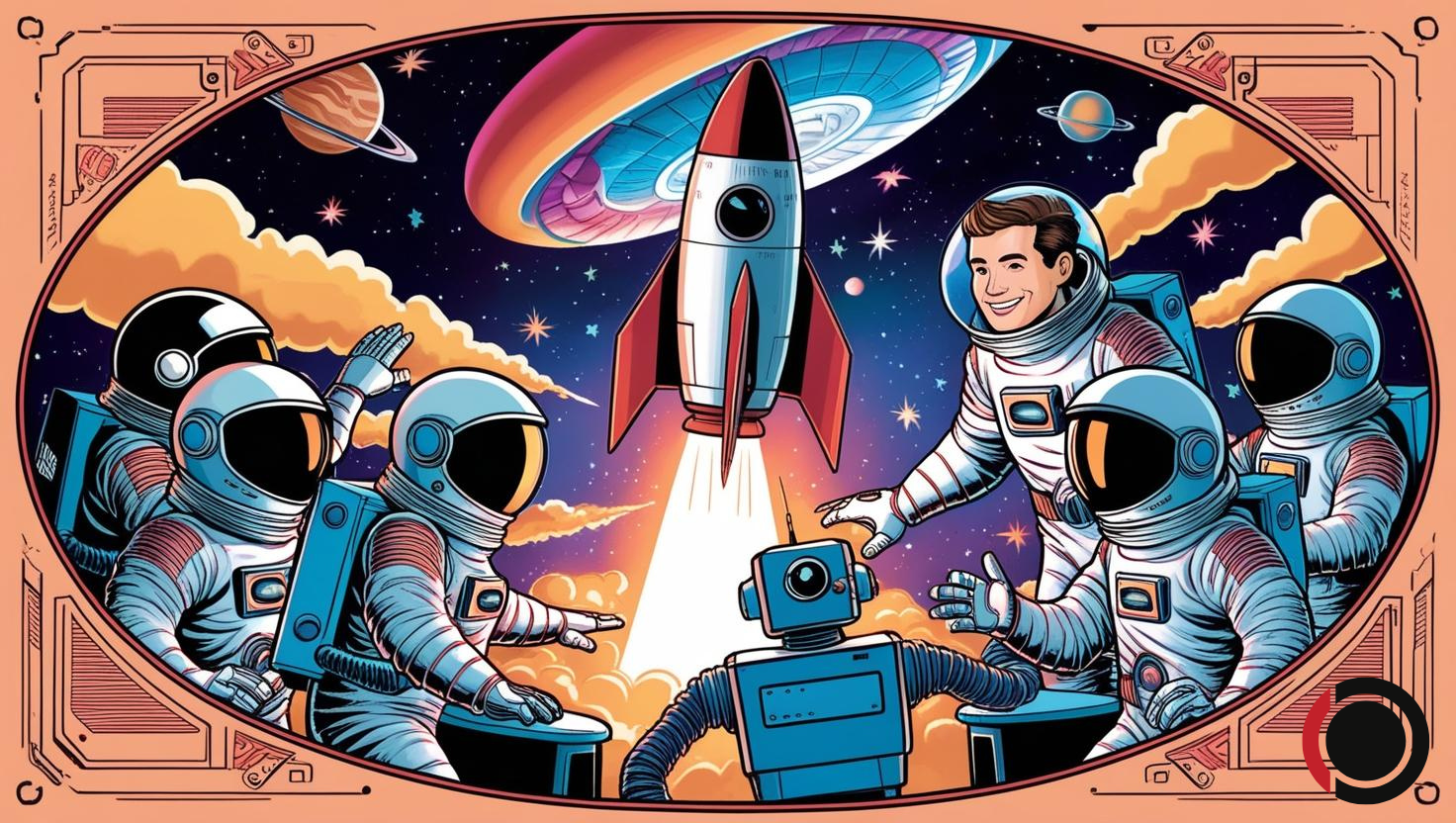
Our mission begins on Prime Earth, where we lay the foundation with our mission, vision, and branding. From there, your journey through the digital universe begins, with clear phases and concrete steps that guide you toward your ultimate goal: sustainable success in the digital world.
Phase 1: Mars – Design Thinking In this first phase, you learn how to build a solid foundation with creative ideas and strategic design. From coming up with a business name to branding and target audience analysis, we help you create your blueprint.
Phase 2: Jupiter – Digital Presence Here we focus on building your online presence. From creating a website or webshop to social media and landing pages, we make sure your brand becomes visible.
Phase 3: Saturn – Data Analytics Insight through measurement. In this phase, you learn how to use data to make smart decisions and refine your strategy, using both standard and advanced analytics tools.
Phase 4: Uranus – Digital Leadership This is where strategy and execution come together. You learn how to steer your business using strategy development, project management, and strengthening customer loyalty.
Phase 5: Neptune – Growth Here it’s all about optimization and scalability. This phase combines all the elements from earlier steps to keep growing and stay ahead of the competition.
What’s on the roadmap?
Our blogs take you through this journey step by step. The next stop is Mars – Design Thinking, where we explore how to lay a strong foundation for your online success. You’ll learn everything about creating a business identity and setting up your brand strategically.
Keep following us and discover how you can apply each step in your own digital journey. Together, we make sure your rocket reaches its final destination!

Follow us on Social Media
Stay up to date with our latest tips, trends, and inspiring stories by following us on social media. Don’t miss any updates and get a behind-the-scenes look at our projects and successes. Follow us on Facebook, Instagram, LinkedIn and TikTok for daily inspiration and valuable insights!
Let’s shape your digital future together!